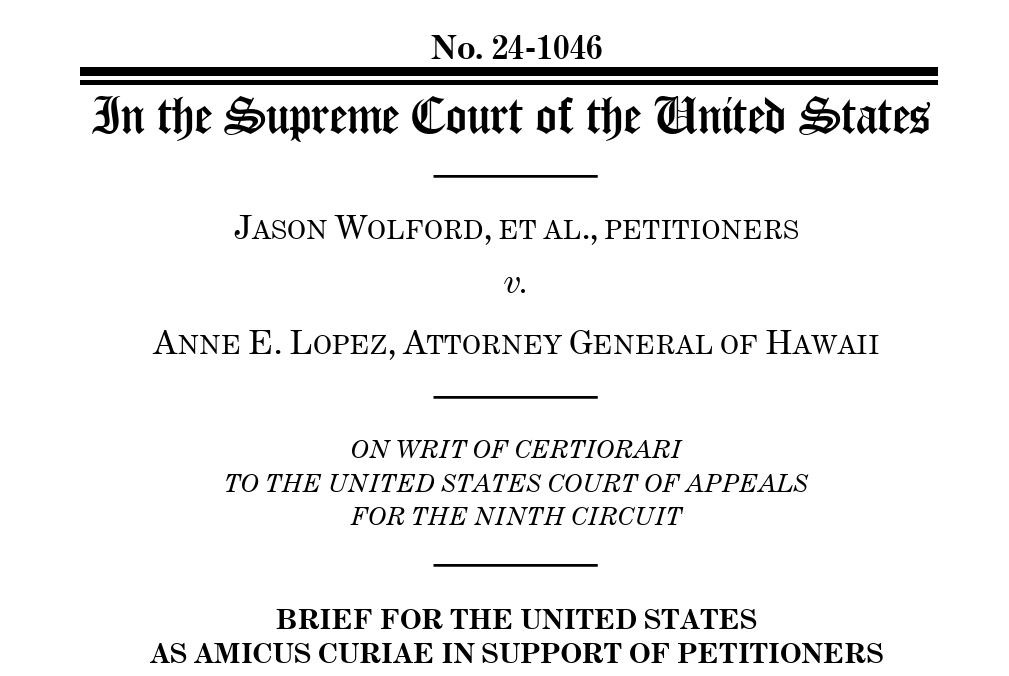
The United States has filed an amicus brief in support of the petitioners in Wolford v Lopez, the case concerning Hawaii's "Vampire Rule" law which requires those with carry permits to get consent before entering any private property, even businesses otherwise open to the public. The brief represents the first time the United States Department of Justice has filed an amicus brief in support of the Second Amendment and gun rights litigants in a case granted review by the Supreme Court. It follows their earlier support of the Wolford petition at the cert stage, which was likely a major reason the case was granted review in the first place.
The United States writes that Hawaii's restriction is "blatantly unconstitutional as applied to private property open to the public. States cannot evade Bruen by banning public carry through indirect means."

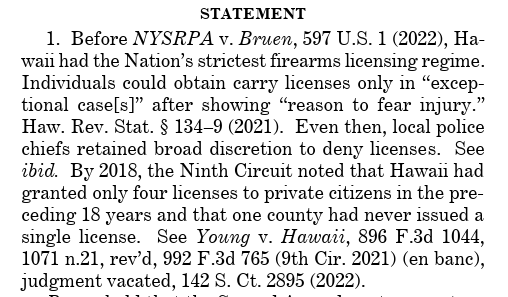
The United States points out how before Bruen, the state of Hawaii had granted just four carry permits in 18 years. It's no coincidence that the small handful of states adopting the Vampire Rule are ones that have long opposed the right to carry.
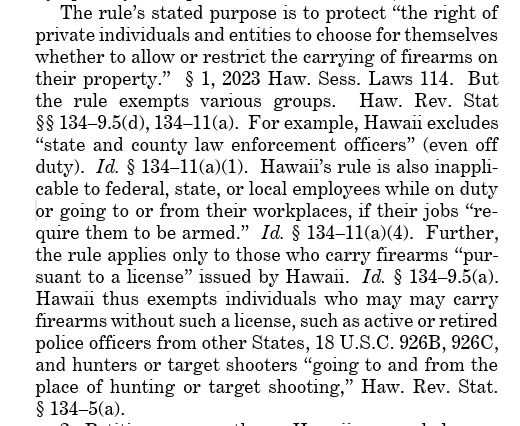
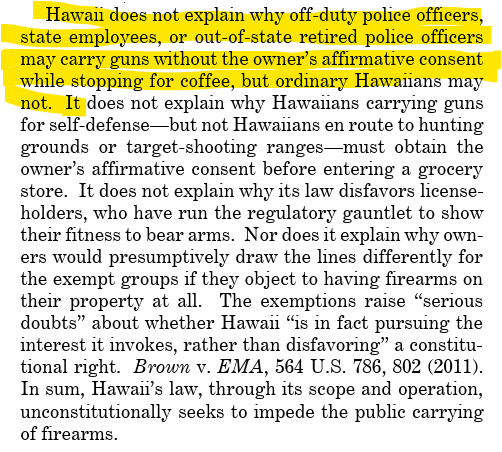
By exempting police and a few other groups, Hawaii reveals that this isn't really a "default" rule at all, the default only applies to normal citizens with carry permits. (This is why I insist on calling it the "Vampire Rule" instead).
The United States argues that firearms regulations "may not be designed simply to inhibit the ability to possess or carry protected arms."
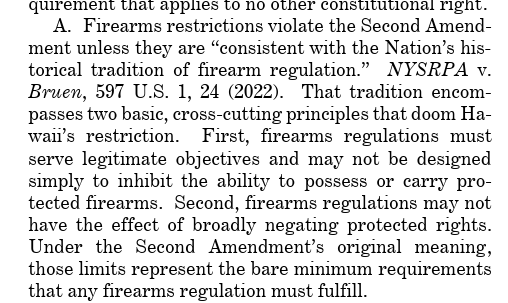
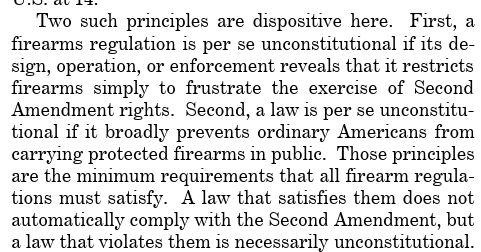
The Vampire Rule "was pioneered in 2020 as an avowed attempt to circumvent Second Amendment rights, was first adopted by a State in 2023, and does not fit within any broader principle accepted at the Founding."
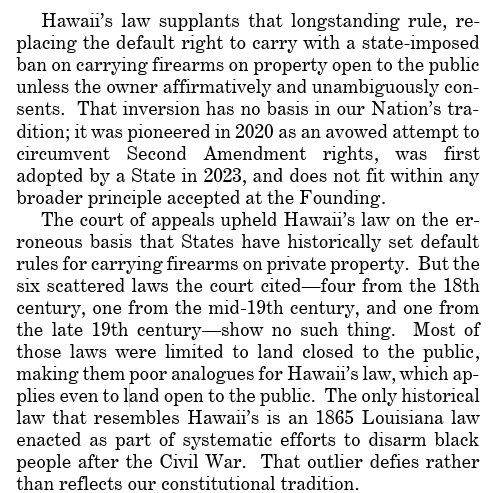
The United States proposes two high level principles as a surface-level test of whether a carry law is per se unconstitutional. First, was it designed to frustrate the exercise of Second Amendment rights as its core purpose? Second, does it broadly prevent ordinary Americans from carrying protected arms in public? If yes to either one, it is definitely unacceptable.
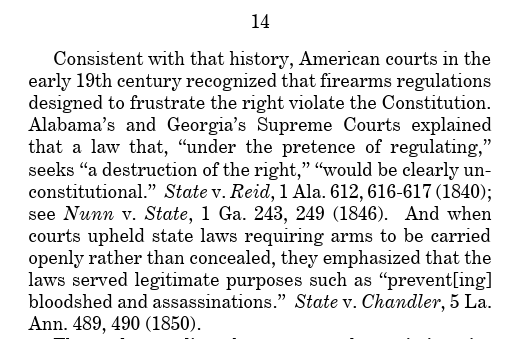
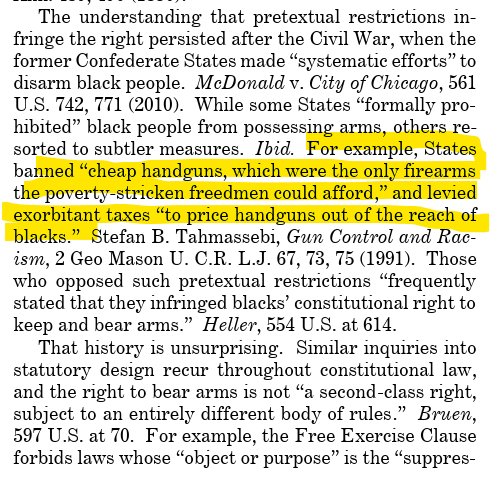
For the first principle, they point to founding era and Early American treatises, as well as early court rulings like State v. Reid.
(Sidenote: through things like handgun rosters, exorbitant fees on carry permits, and excise taxes, California and other states are doing effectively the same thing today.)
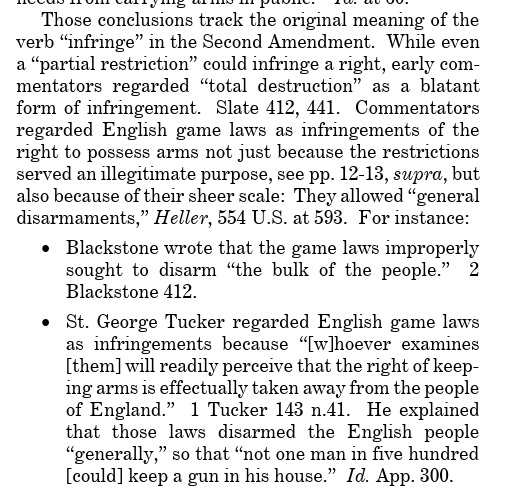
Founding era criticisms of English game laws (which had the effect of broadly disarming the bulk of citizens) reveal our tradition of staunch opposition to broadly restricting the right to carry.
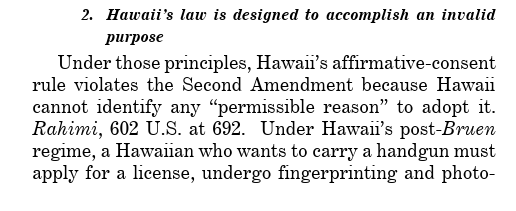
Similar to our brief, the United States argues that the Vampire rule is obviously meant to undermine the right to carry, as it applies to people who Hawaii has extensively vetted. There is no legitimate public safety concern.
This criticism of exempting police is entirely correct, but honestly not something we expected to see pointed out in the government's brief. A pleasant surprise for sure.
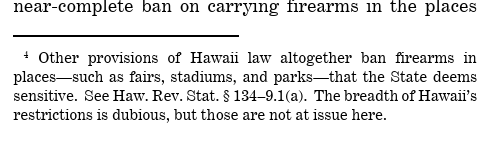
In a footnote, the United States hints that other location restrictions are also unconstitutional, calling them "dubious."
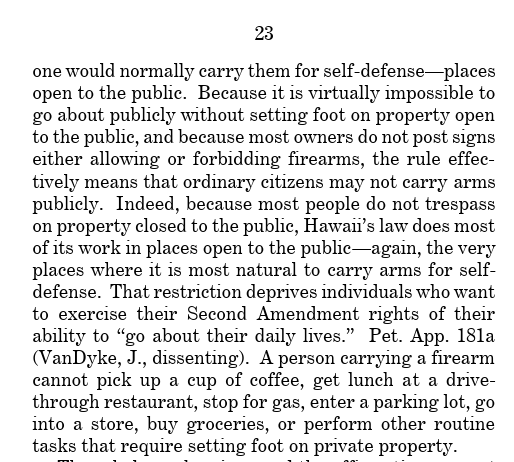
"A person carrying a firearm cannot pick up a cup of coffee, get lunch at a drivethrough restaurant, stop for gas, enter a parking lot, go into a store, buy groceries, or perform other routine tasks that require setting foot on private property."
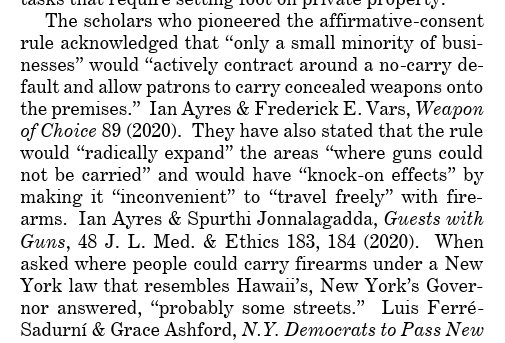
Similar to our brief, the United States points out how the Vampire Rule was invented by antigun academics with the express intention of discouraging the right to carry. They also cite, as we do, Governor Hochul of New York admitting her goal was to only allow carry on "some streets" at most.
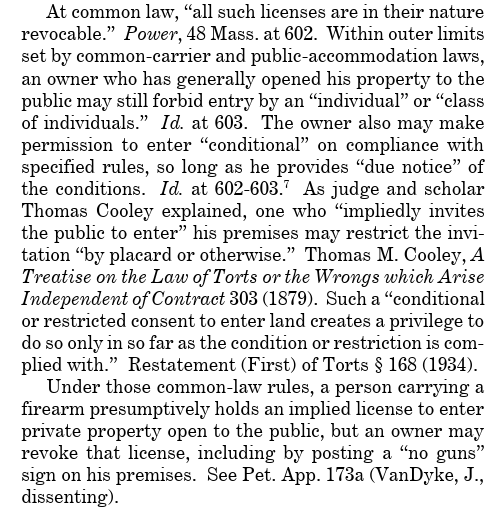
The United States discusses how the historical tradition has always been that property held open to the public does not require any consent to enter, there is instead an implied license to do so.

If a property owner wishes to revoke or modify that implied license, they may post a sign saying so. (e.g., "No Firearms Allowed.") But that is the property owner's prerogative, not the State's.
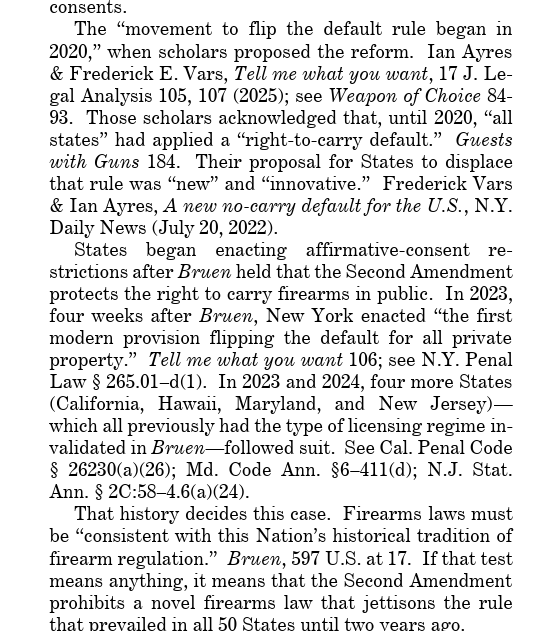
If the historical tradition test means anything, "it means that the Second Amendment prohibits a novel firearms law that jettisons the rule that prevailed in all 50 States until two years ago."
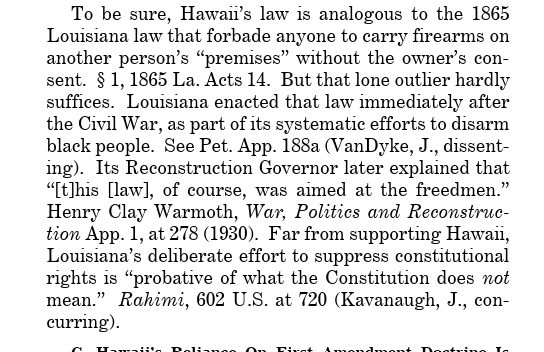
The United States criticizes Hawaii and the Ninth Circuit for relying on a Black Code.
We cited one example of Vampire Rule-style laws being rejected in the First Amendment context, but the United States includes several more. Great legal research here.
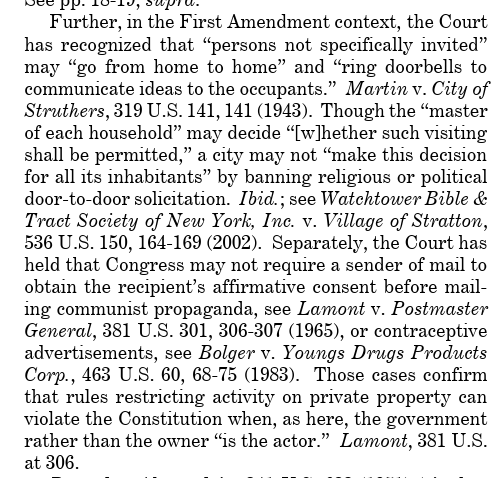
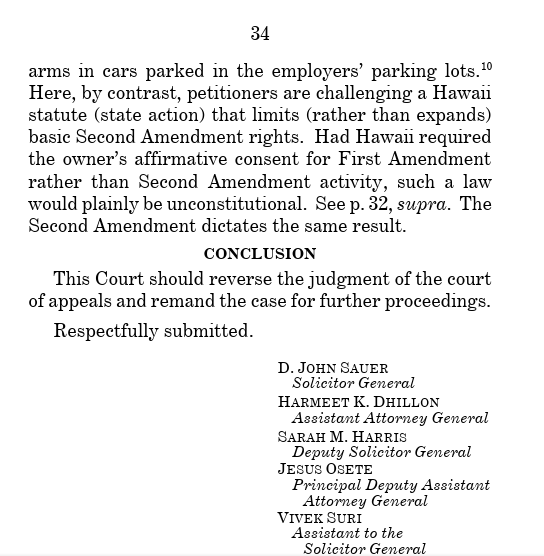
The brief concludes "Had Hawaii required the owner’s affirmative consent for First Amendment rather than Second Amendment activity, such a law would plainly be unconstitutional . . . The Second Amendment dictates the same result."