
In 1991, 7-year-old Alex Golesh watched tanks roll through Red Square. His family escaped to America with $400. Now Alex is the head football coach at USF, even though he never played college ball. 🧵THREAD
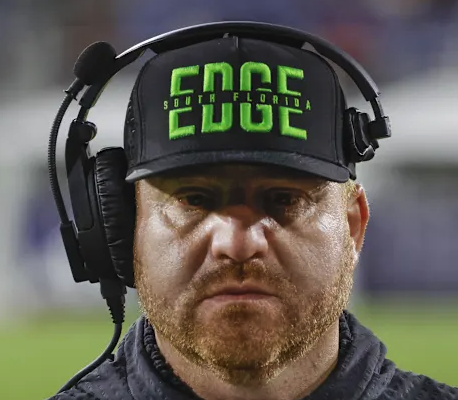
His father Vladimir was a telecommunications engineer in Moscow. His mother Bella raised two boys in a high-rise apartment. Both grandfathers were military men who kept warning: "You need to leave if you can."

September 22, 1991. The Golesh family—Alex, his brother Eugene, parents, and grandparents—landed at JFK with exactly $400. An aunt who'd immigrated earlier met them at the airport.

Alex was 7 years old. He spoke zero English. He enrolled in ESL classes in Brooklyn while his parents' Russian university degrees became worthless paper in America.

Vladimir drove a delivery truck. Bella worked odd jobs before getting an associate's degree to work in nursing homes. Their son watched them grind every single day.
"I saw my dad and my mom work so stinking hard to give us a better life," Alex later said. "If I ever chose not to, I'd be cheating everything they ever did for us." That became his fuel.
At age 12, the family moved to Dublin, Ohio. That's where Alex Golesh touched a football for the first time. New York didn't have youth programs where they lived in Brooklyn.
He fell in love with it instantly. At Dublin Scioto High School, he played as an undersized two-way lineman. His offensive coordinator, Jeff Jones, lived around the corner and became his first mentor.

Jones described him as "a consummate team player" whose "better than anybody we had." At 17, he was the first non-family visitor when Jones and his wife had their newborn son. Jones now works for Golesh at USF as Director of Player Development.
Golesh never played college football. Instead, at 19, while studying education at Ohio State, he took his first coaching job at Westerville Central High School. He decided then that coaching would be his profession.
From 2004-2005, he worked as a student assistant at Ohio State under Jim Tressel. He spent 2 years with the defensive line coach Jim Heacock. Heacock gave him responsibilities rarely trusted to unpaid student coaches.

Then came the grind. Graduate assistant at Northern Illinois (2006-07). Graduate assistant at Oklahoma State (2008). Every stop, he made himself indispensable.
At Oklahoma State, he met Tim Beckman. When Beckman became head coach at Toledo in 2009, he brought 25-year-old Golesh as running backs coach and recruiting coordinator. Golesh secured back-to-back #1 MAC recruiting classes in 2010 and 2011.

In 2016, he reunited with Matt Campbell at Iowa State. Tight ends coach and recruiting coordinator. He helped land four consecutive top-50 recruiting classes—all among the best in Iowa State history.

Then came the relationship that changed everything. Josh Heupel hired Golesh as co-offensive coordinator at UCF in 2020. Golesh had studied Heupel's tempo-based offense "from afar" for years.

When Heupel took the Tennessee job in 2021, he made a crucial decision. He gave Golesh primary play-calling duties. Year one at Tennessee: scoring offense jumped from #108 nationally to #7.

Year two was historic. Tennessee ranked #1 nationally in scoring (46.1 ppg) and total offense (538.1 ypg). Golesh was named a Broyles Award finalist as the nation's top assistant coach.
December 4, 2022. USF hired Golesh as head coach at age 38. He inherited a 1-11 disaster—the worst record in FBS.

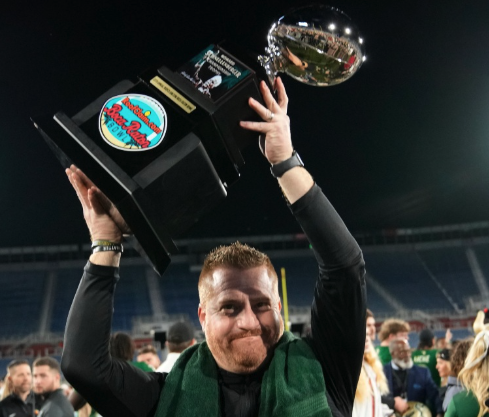
Year one: 7-6, one of the biggest turnarounds in the country. The Bulls destroyed Syracuse 45-0 in the Boca Raton Bowl—the largest shutout in bowl game history. Golesh became the first coach in USF history to win bowl games in his first two seasons.
2025 season: USF started 2-0 with wins over #25 Boise State and #13 Florida in The Swamp. The Bulls earned a #18 AP ranking. The immigrant kid who never played college ball is now one of the hottest names in coaching.
His parents sacrificed comfortable careers in Moscow to drive trucks and work nursing homes in America. Their son took that gift and ran with it. "They're so beyond proud of me," he said, "and I feel like I'm at least on my way to paying them back."
The American Dream isn't a guarantee. It's a possibility for those hungry enough to outwork their circumstances. Golesh watched tanks in Red Square and built his life one relationship, one recruit, one play call at a time—until $400 became millions.
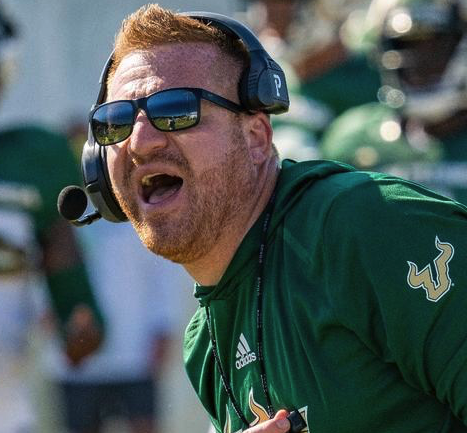
Here’s Golesh speaking on his coaching philosophy…